Artificial Intelligence (AI) is transforming how digital content is created. From realistic face swaps to cloned voices and AI-generated videos, technology is advancing at an unprecedented pace. While these innovations offer exciting opportunities, they have also made it easier to misuse a person’s identity without their knowledge or consent.
Imagine waking up to find a video of yourself saying things you never said, promoting a product you have never used, or hearing a voice that sounds exactly like yours—but it was entirely generated by artificial intelligence. This is no longer science fiction. The viral deepfake involving actress Rashmika Mandanna and the increasing use of AI-generated voices have highlighted a growing legal concern in India.
The question many people now ask is: Can someone legally use your face, voice, or identity without your permission?
Under Indian law, courts are increasingly recognising that every individual has the right to protect their identity from unauthorised exploitation.
What Are Personality Rights?
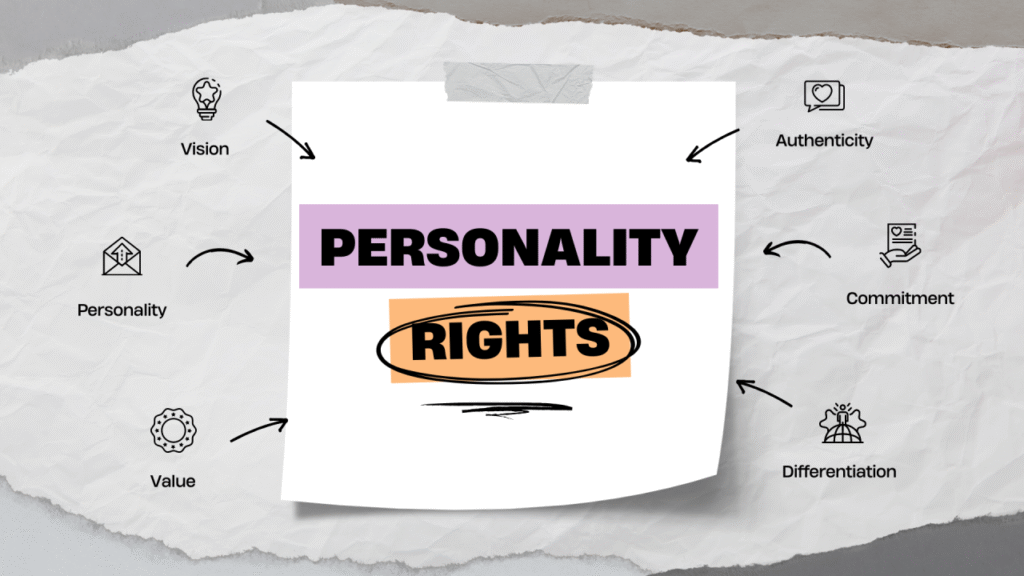
Personality rights refer to an individual’s right to control the commercial and public use of their identity. These rights protect various aspects of a person’s identity, including:
- Name
- Face
- Photograph
- Voice
- Signature
- Likeness
- Image
- Distinctive gestures
- Other unique personal attributes
These rights prevent unauthorised commercial exploitation, false endorsements, impersonation, and misuse of an individual’s identity.
Although India does not yet have a standalone law specifically dealing with personality rights, Indian courts have recognised these protections through judicial precedents, the Right to Privacy, and Article 21 of the Constitution of India, which guarantees the right to life and personal liberty.
Can AI Legally Copy Your Face or Voice?
Artificial intelligence can now create highly realistic:
- Deepfake videos
- AI-generated voices
- Face-swapped videos
- Digital avatars
- Synthetic speech
- AI-generated endorsements
However, simply because technology makes this possible does not mean it is legally permissible. Using another person’s identity without consent—particularly for commercial purposes, deception, fraud, or reputational harm—may amount to a violation of personality rights and other legal protections available under Indian law.
How Have Indian Courts Protected Personality Rights?
Indian courts have increasingly recognised that a person’s identity deserves legal protection.
In Anil Kapoor v. Simply Life India & Ors., the Delhi High Court restrained the unauthorised use of the actor’s name, image, voice, likeness, and even his famous catchphrase through AI-generated content and other commercial activities. The Court recognised that an individual’s identity cannot be commercially exploited without permission.
Similarly, in Arijit Singh v. Codible Ventures LLP & Ors., the Delhi High Court protected the singer’s voice and personality rights by restraining unauthorised AI-generated reproductions and misuse of his identity.
These decisions demonstrate that Indian courts are willing to grant urgent relief where AI technology is used to exploit or misrepresent an individual’s identity without consent.
Are Personality Rights Limited to Celebrities?
No.
A common misconception is that only celebrities can enforce personality rights. That is incorrect.
Every individual has a legitimate interest in protecting their identity. While celebrities may suffer commercial losses due to unauthorised use of their image or voice, ordinary individuals can experience serious consequences, including:
- Identity theft
- Online impersonation
- Fake social media profiles
- Financial fraud
- Reputation damage
- Harassment
- Emotional distress
As AI-generated content becomes increasingly sophisticated, anyone can become a victim of deepfakes or voice cloning.
What Legal Remedies Are Available?
Depending on the facts of each case, victims of AI-generated impersonation may seek legal remedies through the courts, including:
- Interim injunctions restraining further misuse
- Permanent injunctions
- Takedown orders directing online platforms to remove infringing content
- Disclosure of information relating to anonymous uploaders where appropriate
- Damages or compensation for losses suffered
- Other reliefs available under applicable civil and statutory laws
Depending on the circumstances, remedies may also arise under the Information Technology Act, 2000, the Digital Personal Data Protection Act, 2023, constitutional privacy protections, and applicable intellectual property principles.
What Should You Do If Your Identity Is Misused?
Time is critical because AI-generated content can spread rapidly across multiple platforms.
If you discover that your face, voice, or identity has been misused:
- Preserve screenshots immediately.
- Save URLs and website links.
- Download or record videos and audio where possible.
- Note the date and time of publication.
- Avoid sharing the fake content further.
- Consult an experienced lawyer without delay.
Legal proceedings may be initiated before the appropriate High Court seeking urgent interim relief. In suitable cases, courts have granted ex parte injunctions to prevent further dissemination while legal proceedings are pending.
Prompt legal action significantly improves the chances of limiting further harm.
How Can Jain Law Chambers Help?
At Jain Law Chambers, we advise individuals, professionals, businesses, content creators, and public figures on legal disputes involving:
- AI-generated content
- Personality rights
- Online reputation management
- Digital privacy
- Identity misuse
- Deepfake-related legal issues
Our legal team assists clients in obtaining urgent injunctions, securing takedown orders, protecting personality rights, and pursuing appropriate legal remedies against unauthorised use of their identity.
As AI technology continues to evolve, timely legal intervention is often the most effective way to safeguard your reputation and personal rights.
Conclusion
Artificial intelligence is rapidly transforming the digital world, but technological advancement does not diminish an individual’s legal rights.
Your face, voice, name, and identity remain your own. If they are used without your consent through AI-generated content, Indian law increasingly recognises your right to seek legal protection.
Whether you are a public figure or a private citizen, understanding your personality rights is the first step towards protecting yourself in the age of artificial intelligence.
Frequently Asked Questions
Can AI legally copy my face in India?
AI can technically generate content using your likeness, but unauthorised use of your face or identity may violate your personality rights and other legal protections under Indian law.
Is AI voice cloning legal in India?
Voice cloning without consent, particularly for commercial use, fraud, impersonation, or misrepresentation, may give rise to legal action depending on the facts of the case.
Can ordinary people claim personality rights?
Yes. Personality rights are not limited to celebrities. Every individual has the right to protect their identity from unauthorised exploitation.
What should I do if someone creates an AI deepfake of me?
Preserve all available evidence, including screenshots, URLs, recordings, and publication dates, and seek legal advice immediately to explore appropriate legal remedies.
Does India have a specific AI law protecting personality rights?
India does not currently have a standalone law specifically governing personality rights. However, protection is derived from constitutional rights, judicial precedents, privacy principles, and applicable statutory provisions.

Advocate Sakshi Jain is the Founder of Jain Law Chambers and brings in-depth experience across criminal, civil, commercial, and company law. She is widely recognized for her sharp legal strategy, thorough case preparation, and strong commitment to her clients. Under her guidance, Jain Law Chambers has grown into a trusted firm known for its ethical practice, professional approach, and result-oriented legal solutions.